
Dog Healthcare, Dogs
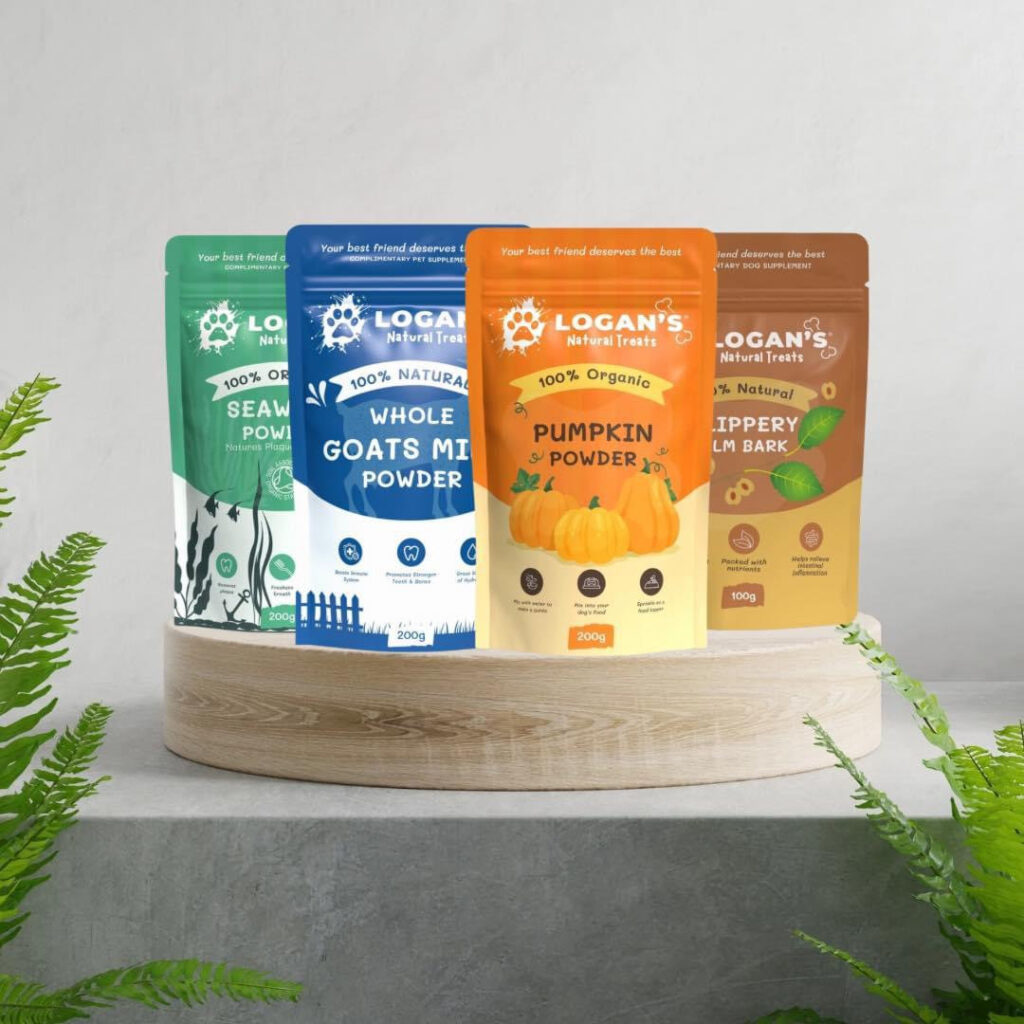
Natural Digestive Support for Dogs: Pumpkin Powder, Goat Milk Powder & Slippery Elm Bark
Aug
If your dog has a sensitive tummy, you’ve probably had someone recommend “just add a bit of pumpkin” at some point. It turns out that advice — along with a couple of other natural additions — has real substance behind it. Here’s a closer look at three of the most popular natural supplements for canine digestive health, what they’re actually used for, and where they fit alongside your dog’s regular diet.
As always: these are supportive additions, not substitutes for veterinary care. If your dog has ongoing or severe digestive symptoms, a vet visit should always come first.
Pumpkin Powder
Plain pumpkin has long been a go-to home remedy for upset tummies, and pumpkin powder is simply a more convenient, shelf-stable way to get the same benefit into your dog’s bowl.
What it’s used for:
- Fibre support — pumpkin is naturally high in soluble fibre, which can help firm up loose stools and, somewhat counterintuitively, also ease mild constipation by adding bulk and moisture-holding capacity to the gut.
- Gentle, palatable addition — most dogs genuinely enjoy the taste, which makes it an easy way to add fibre without a fight at mealtimes.
- Supporting healthy weight management — because it’s low in calories relative to its bulk, it can help dogs feel fuller without excess calories.
Good to know: stick to pure pumpkin powder (or plain tinned pumpkin) rather than pumpkin pie filling, which often contains added sugar and spices that aren’t suitable for dogs.
Goat Milk Powder
Goat milk has become a popular topper in recent years, largely because it tends to sit more comfortably with dogs than cow’s milk.
What it’s used for:
- Easier digestibility — goat milk has a different fat and protein structure to cow’s milk, with smaller fat globules and lower lactose content, which many dogs tolerate more easily.
- Natural probiotics and enzymes — raw and minimally processed goat milk powders often retain beneficial bacteria and enzymes that can support gut flora balance.
- Palatability for fussy eaters — it’s a popular way to encourage dogs who are reluctant eaters, particularly during recovery from illness or a change in diet.
Good to know: even with lower lactose than cow’s milk, some dogs are still sensitive to dairy — introduce gradually and watch for any signs of intolerance.
Slippery Elm Bark
Slippery elm is the most “medicinal” of the three, and it’s been used in herbal medicine for both humans and animals for a long time.
What it’s used for:
- Soothing the digestive tract — slippery elm bark contains mucilage, a gel-like substance that coats and soothes the lining of the gut, which is why it’s often reached for during bouts of mild diarrhoea or an unsettled stomach.
- Supporting recovery after digestive upset — it’s frequently used as part of a bland, gut-supportive routine while a dog’s system settles.
Good to know: slippery elm is generally considered safe for dogs in appropriate amounts, but because it works by coating the gut, it can also affect how well other medications are absorbed if given too close together. If your dog is on any regular medication, it’s worth checking with your vet on timing before adding it in. And if digestive symptoms are severe, persistent, or accompanied by other signs like lethargy or vomiting, please see your vet rather than relying on home support alone.
Bringing It Together
These three ingredients are often used together or rotated depending on what a dog needs — pumpkin for everyday fibre support, goat milk for palatability and gut flora, and slippery elm for more targeted soothing during a flare-up. None of them are a substitute for a good complete diet, but as natural additions they’re a gentle, low-risk way to support your dog’s digestion day to day.
We stock a range of pumpkin powder, goat milk powder, and slippery elm bark, sourced through Logans, so you can pick what suits your dog’s needs — whether that’s a daily topper or something to keep on hand for the occasional unsettled tummy.
This post is intended as general information, not veterinary advice. Always consult your vet before introducing a new supplement, particularly if your dog is pregnant, nursing, a puppy, or on existing medication.
