
Fish, Fish Nutrition
Tropical Fish Nutrition: Feeding the Right Diet for Every Kind of Fish
Aug
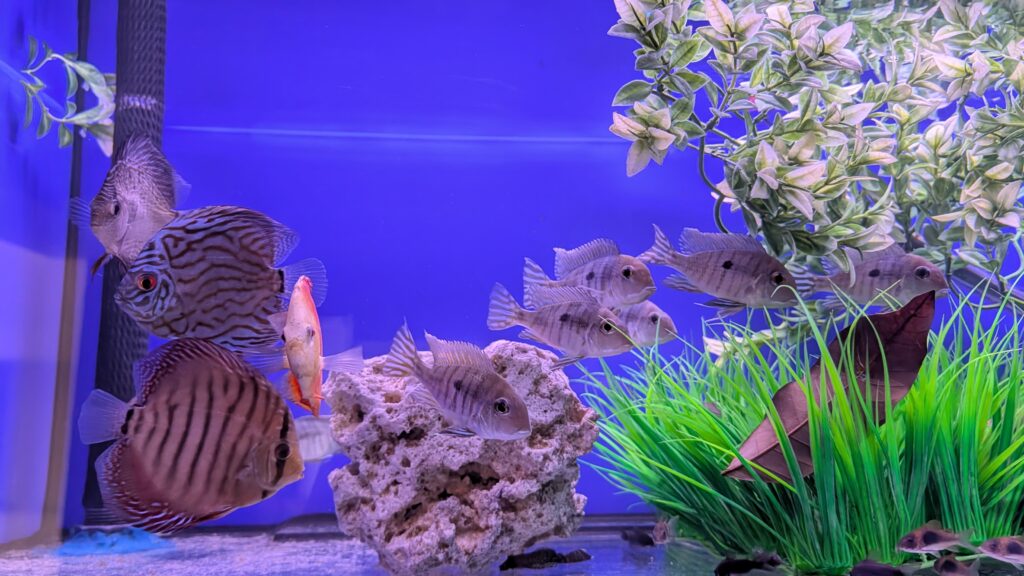
One of the most common mistakes in fishkeeping isn’t about water chemistry or tank size — it’s feeding every fish in the tank the same thing. A shoal of small tetras, a pleco cleaning the glass, and a big, boisterous geophagus all have genuinely different nutritional needs, and getting this right makes a real difference to colour, growth, and long-term health. Here’s a practical guide to feeding your fish properly, whatever’s in your tank.
Small Community Fish
Tetras, rasboras, guppies, and other small community staples are mostly omnivorous, and in the wild they graze frequently on a mix of small insects, larvae, algae, and plant matter rather than eating one big meal.
What they need:
- A good-quality flake or micro-pellet as a staple, formulated for tropical community fish.
- Small, frequent meals — little and often suits their grazing nature far better than one large feed.
- Occasional protein-rich treats such as small live or frozen foods to round out their diet.
Feeding tip: only offer as much as fish can finish in two to three minutes. Small community fish have equally small stomachs, and uneaten flake breaking down in the water is one of the most common causes of poor water quality in a community tank.
Glass Cleaners: Plecos & Other Algae Eaters
It’s a common myth that plecos and similar algae-eating fish can survive on algae alone. In a well-maintained tank, there simply isn’t enough algae to sustain them long-term, and an underfed pleco will often start grazing on plant leaves or even the slime coat of other fish out of hunger.
What they need:
- A dedicated algae wafer or sinking catfish pellet, offered daily — these are formulated to reach the bottom of the tank where plecos and other bottom-dwellers feed.
- Some fibre-rich vegetable matter such as blanched courgette or cucumber, which many plecos take readily.
- Evening feeding, since most plecos and algae eaters are more active — and more likely to actually eat — after lights out.
Feeding tip: watch for competition from faster community fish at feeding time. It’s worth dropping algae wafers in a spot the pleco favours, away from the main feeding area, so it isn’t beaten to the food.
Larger Cichlids & Geophagus
Bigger, more predatory tropical fish — cichlids, geophagus, and similar species — have very different needs to their smaller tankmates. Many are far more carnivorous, and some, like geophagus, are natural substrate sifters that pick through sand looking for small invertebrates in the wild.
What they need:
- A larger cichlid pellet or granule sized appropriately for their mouth — undersized food can be ignored, while oversized food can be a choking risk.
- Higher protein content than a typical community flake, reflecting their more carnivorous diet in the wild.
- Regular meaty foods — live or frozen — to properly support their growth, colour, and condition.
Feeding tip: geophagus in particular benefit from food that sinks quickly, since much of their natural feeding behaviour involves sifting through substrate rather than picking food from the water column.
Standard Foods: Flakes, Pellets & Granules
Dry staple foods remain the backbone of most aquarium diets, and for good reason — they’re convenient, nutritionally complete, and don’t carry the same disease or parasite risk as some live foods.
- Flakes — ideal for small to medium fish that feed at the surface or mid-water.
- Pellets/granules — better suited to larger fish, or bottom feeders when formulated to sink.
- Species-specific formulas — foods designed for herbivores, carnivores, or particular groups (like cichlid or catfish pellets) are worth choosing over a generic mix where possible, since they’re balanced for that group’s specific protein and fibre needs.
A good staple diet should form the bulk of what any fish eats day to day — live and frozen foods work best as a supplement to this, not a replacement for it.
The Benefits of Live & Frozen Food
Adding live or frozen foods to a diet isn’t just a treat — it offers genuine nutritional and behavioural benefits that dry food alone can’t fully replicate.
Why it’s worth feeding:
- Higher protein and moisture content — closer to what fish would naturally eat in the wild, which can support growth, condition, and colour.
- Natural feeding behaviour — hunting or foraging for live food provides mental stimulation and encourages more natural behaviour patterns, particularly in predatory species.
- Conditioning for breeding — many species show improved breeding readiness and condition when fed a varied diet that includes live or frozen foods in the lead-up.
- Appetite stimulation — fussy eaters, new arrivals, or fish recovering from illness will often take live or frozen food when they’re reluctant to eat dry staples.
Popular options include bloodworm, brine shrimp, daphnia, and mysis shrimp — all widely available frozen, which removes most of the disease risk associated with live food while keeping the same nutritional benefits.
A note of caution: live foods sourced from unknown or untreated origins (such as wild-caught insects or pond water) can introduce parasites or disease into your tank. Where possible, choose live food from a reputable specialist supplier, or opt for frozen instead.
Building a Balanced Feeding Routine
As a general guide across most community and cichlid setups:
- Feed a good-quality staple (flake, pellet, or granule) as the foundation of the diet, once or twice daily.
- Supplement with live or frozen food two to three times a week to boost protein, condition, and natural feeding behaviour.
- Match food size and type to the fish — small and frequent for community fish, sinking and substantial for bottom dwellers, larger and protein-rich for bigger predatory species.
- Only feed what can be eaten within a few minutes, and remove any uneaten food to protect water quality.
Getting nutrition right isn’t complicated once you know what each type of fish actually needs — it’s simply a case of matching the food to the feeder, rather than treating every fish in the tank the same.
