
Fish, Fish Habitat
Setting Up a Tropical Fish Habitat: A Beginner’s Guide to Getting It Right
Aug
Setting up a tropical aquarium is one of the most rewarding parts of fishkeeping — but it’s also where most avoidable mistakes happen. Getting the basics right from day one makes the difference between a thriving, low-stress tank and months of battling cloudy water, sick fish, or algae blooms. Here’s what to actually think about before you bring your fish home.
Start With the Right Size Tank
Bigger is almost always easier. It sounds counterintuitive, but larger volumes of water are more stable — temperature, pH, and ammonia levels all fluctuate more slowly and less dramatically in a bigger tank, which gives you a much wider margin for error while you’re learning.
A few starting points:
- Under 20 litres — really only suitable for a small betta or a handful of shrimp; not enough volume for a proper community of tropical fish.
- 50–75 litres — a reasonable beginner tank for a small community of hardy, small tropical fish.
- 100 litres and above — considerably more stable and forgiving, and lets you keep a wider variety of species comfortably.
Always research the adult size and specific needs of the fish you want before choosing your tank, rather than the other way around — stocking decisions should drive tank size, not the reverse.
Essential Equipment
A few pieces of kit aren’t optional extras — they’re what keeps fish alive.
- Filter — sized appropriately for your tank volume (as a rough guide, look for a filter rated to turn over your tank’s total volume at least 4 times per hour). This drives the biological filtration that breaks down fish waste.
- Heater — tropical fish need a stable, warm temperature, and room temperature alone is rarely enough or consistent enough. Choose a heater rated for your tank size, and pair it with a reliable thermometer so you can actually confirm it’s holding steady.
- Lighting — supports any live plants you keep and helps fish maintain a normal day/night rhythm. Match the light to whether you’re keeping live plants (which need more intensity) or just fish (which need much less).
- Substrate — gravel or sand, chosen with your fish and any plants in mind; some species (like corydoras catfish) need soft, fine substrate to protect their delicate barbels.
- Test kit — for ammonia, nitrite, nitrate, and pH. This is genuinely essential, not optional — it’s the only way to know what’s actually happening in your water before problems become visible.
- Water conditioner — to neutralise chlorine and chloramine from tap water before it goes anywhere near your fish.
Getting the Temperature Right
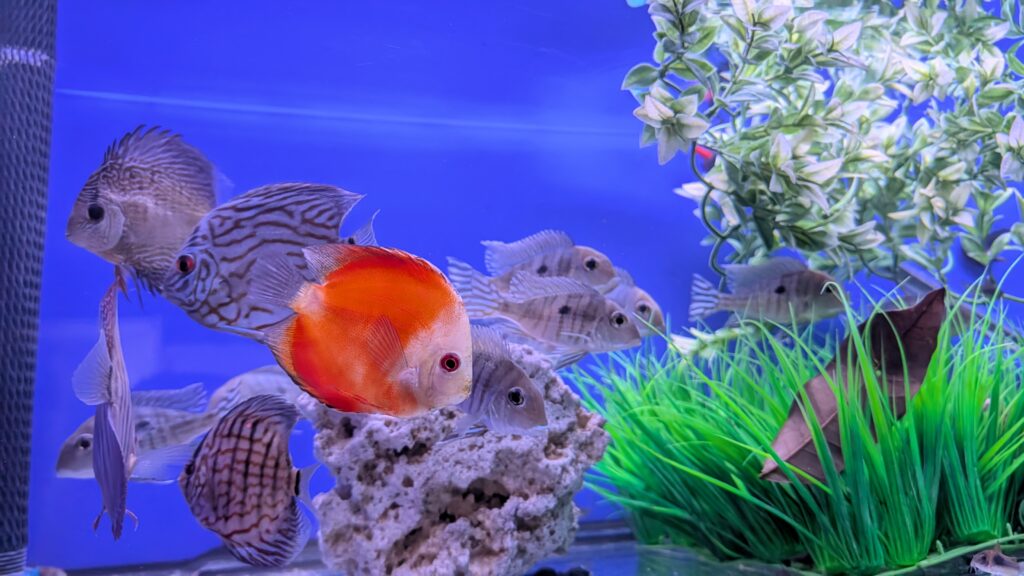
Most tropical freshwater fish do well somewhere in the 24–27°C range, though this varies by species — some, like discus, prefer it warmer, while others, like white cloud mountain minnows, are happier cooler. Always check the specific needs of the species you’re keeping rather than assuming one temperature suits everyone in a mixed community tank.
Consistency matters as much as the exact number. Sudden swings are far more stressful to fish than a stable temperature that’s slightly outside the “ideal” range, so a reliable heater and thermometer combination is worth prioritising over chasing a precise figure.
Don’t Skip the Nitrogen Cycle
Before any fish go in, your tank needs to go through what’s called “cycling” — establishing the beneficial bacteria that convert toxic ammonia (from fish waste) into nitrite, and then into much less harmful nitrate. This typically takes four to six weeks using a fishless cycling method, and it’s the single most important step new fishkeepers are tempted to rush.
Adding fish to an uncycled tank is one of the most common causes of early fish loss — it’s worth the wait.
Building Your Stocking List
Once your tank is cycled and stable:
- Introduce fish gradually, a few at a time, rather than stocking the whole tank at once — this gives your filter’s bacteria colony time to keep up with the increased waste load.
- Research compatibility carefully — temperament, adult size, and water parameter needs should all line up before fish share a tank.
- Keep an eye on water parameters more closely in the weeks after each new addition, since this is when a tank is most likely to show signs of strain.
The Bottom Line
A successful tropical aquarium comes down to matching your equipment to your tank size, keeping temperature and water quality stable, and being patient before adding fish. Take the time to get the fundamentals right at setup, and the day-to-day maintenance becomes far easier from there.
Not sure what equipment suits your tank size or the species you’re planning to keep? Our team is always happy to help you put together the right setup from the start.
