
Cat Healthcare, Cats
Cat Healthcare: Why Regular Worming, Flea & Tick Treatment Matters for Outdoor Cats
Sep
If your cat spends time outdoors, parasite prevention isn’t a box to tick once and forget — it’s an ongoing part of responsible cat care. Outdoor cats are exposed to worms, fleas, and ticks on every hunting trip, garden wander, and encounter with another animal, and staying on top of it protects far more than just your cat’s comfort. Here’s why regular treatment matters, and how to build a routine that actually works.
Why Outdoor Cats Are at Higher Risk
Cats that go outside pick up parasites through everyday behaviour that’s completely natural to them — hunting, exploring long grass, and coming into contact with other cats, wildlife, and their droppings.
- Worms are commonly picked up from eating infected prey (mice, birds, and similar), fleas (which can carry tapworm larvae), or contaminated soil.
- Fleas can be picked up from almost any outdoor environment, and from contact with other animals — a single flea can lead to an infestation surprisingly quickly given how fast they reproduce.
- Ticks are usually picked up from long grass, woodland, or areas with wildlife, and can attach without an owner noticing until a proper check is done.
An indoor-only cat can still occasionally need treatment (fleas can hitch a ride in on shoes, clothing, or another pet), but the frequency and consistency of exposure is simply much higher for a cat that goes outside regularly.
Why Consistent Worming Matters
Worms aren’t just an internal nuisance — left untreated, they can cause weight loss, a poor coat, vomiting, diarrhoea, and in young or vulnerable cats, more serious complications. Because outdoor cats are re-exposed continually through hunting and general outdoor activity, a single treatment doesn’t offer lasting protection — it needs to be part of a regular routine, typically every one to three months depending on the product and your cat’s risk level.
Some worm types, such as tapeworm, are also linked directly to flea control — since fleas can carry tapworm larvae, effective worming and effective flea prevention really need to go hand in hand for an outdoor cat.
Why Consistent Flea & Tick Treatment Matters
Beyond the itching and discomfort, fleas and ticks carry real health risks:
- Fleas can cause skin irritation and allergic reactions, contribute to anaemia in heavy infestations (particularly in kittens), and transmit tapeworm.
- Ticks can transmit disease, and left attached, can cause local skin irritation and infection at the bite site.
- Home infestations are a genuine risk too — the majority of a flea infestation (eggs, larvae, and pupae) actually lives in your home environment, not on your cat, which is why a reactive, “treat only when I see one” approach rarely solves the problem for good.
Consistent, scheduled treatment breaks the flea life cycle before it becomes an infestation, rather than trying to catch up once it already has.
Building a Simple, Effective Routine
For most outdoor cats, a straightforward routine covers the bases:
- Worming: every 1–3 months, depending on the product and how much hunting your cat does — more frequent hunters generally benefit from the shorter end of that range.
- Flea & tick treatment: monthly spot-on treatment is the most common approach for consistent, ongoing protection.
- Home treatment: alongside treating your cat, treating the home environment (carpets, soft furnishings, bedding) is worth doing periodically, particularly if you’ve had a flea problem before, since this is where most of the flea life cycle actually happens.
The Johnson’s Veterinary Guardian Range
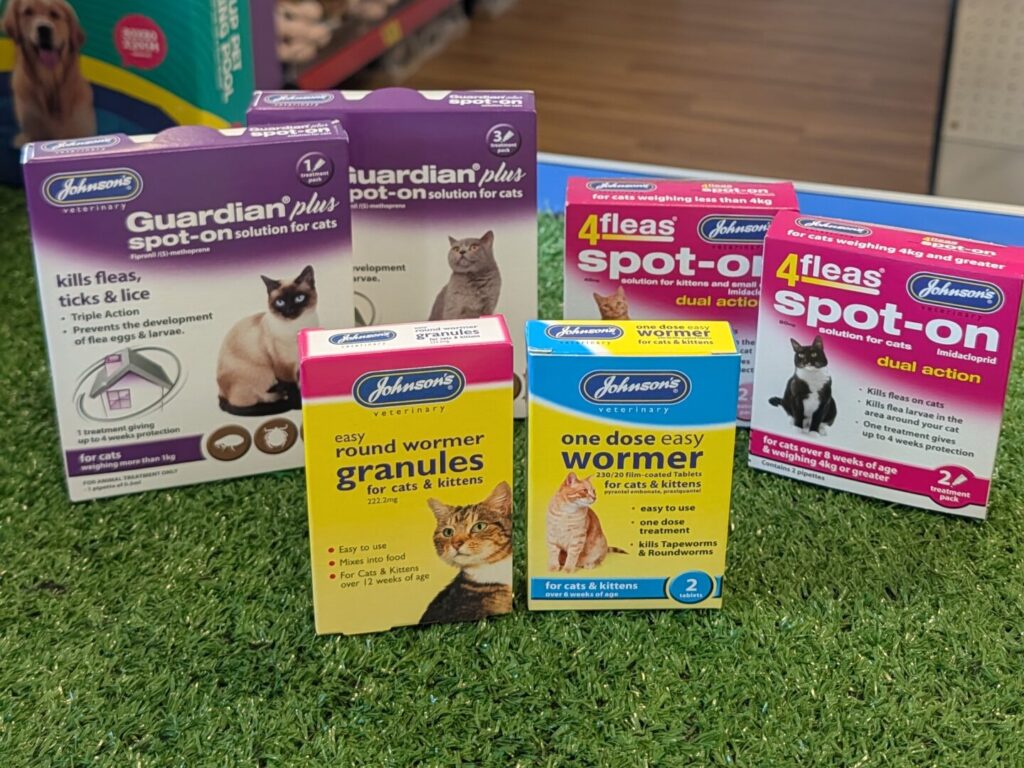
We stock the Johnson’s Veterinary Guardian range in store, which covers each part of this routine:
- Guardian Plus Spot-On for Cats — a veterinary-strength, triple-action spot-on treatment that kills fleas, ticks, and lice on contact, while also preventing flea eggs and larvae from developing. Each pipette gives protection against fleas for up to 4 weeks and against ticks for up to 2 weeks.
- Johnson’s Cat & Kitten Easy Wormer Granules — odourless, tasteless granules that mix easily into food, making regular worming straightforward even for fussy cats.
- Johnson’s Wormer Plus Tablets for Cats & Kittens — a broad-spectrum tablet wormer, treating both roundworm and tapeworm.
- Guardian Home Flea Spray — for treating the home environment itself, targeting fleas in carpets, soft furnishings, and bedding for up to 6 months, which pairs well with on-cat treatment for genuinely thorough flea control.
Using an on-cat treatment alongside a home treatment gives you cover on both fronts — breaking the cycle on your cat and in the environment where most of it actually plays out.
A Few Practical Tips
- Always check the product is suitable for your cat’s weight and age before use, and follow the dosing instructions exactly.
- Keep treatments on a calendar or reminder — consistency is what actually breaks the cycle, far more than any single treatment.
- Check your cat over regularly, particularly after time in long grass or woodland, so any ticks are caught and removed promptly.
- If you’re ever unsure which product or schedule suits your cat, particularly for kittens, pregnant or nursing cats, or cats with existing health conditions, ask in store or speak to your vet.
Pop in store to pick up the Johnson’s Veterinary Guardian range, or ask our team for advice on building the right worming and flea treatment routine for your cat.
